The rapid expansion of renewable energy has created growing demand for reliable construction equipment. Wind farms and large-scale solar projects require extensive concrete work, including turbine foundations, inverter pads, equipment bases, access infrastructure, and other structural elements. Completing these tasks efficiently depends on coordinating concrete delivery, pumping capacity, site access, and construction schedules.
For contractors working on renewable energy projects, used concrete pump trucks can offer a practical way to expand pumping capacity without the capital investment required for new equipment. When properly inspected and matched to project requirements, a used concrete pump truck can help deliver concrete to challenging locations, reduce manual handling, and support more efficient foundation construction.
Applications of Used Concrete Pump Trucks in Wind Turbine Construction
Wind energy construction involves several concrete placement tasks, with turbine foundations representing one of the most demanding applications.
Wind Turbine Foundation Pours
A wind turbine foundation transfers structural loads from the tower into the ground. Its design depends on factors such as turbine specifications, soil conditions, wind loading, and the engineering requirements of the project.
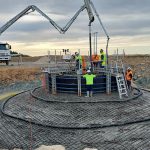
Some foundations involve large reinforced concrete pours that require carefully planned placement sequences. A concrete pump truck can help distribute concrete across the formwork and around reinforcement, reducing the need to move concrete manually.
For major foundation pours, contractors should confirm that the pump can maintain the required output throughout the planned placement window. The concrete mix, aggregate size, pipeline configuration, vertical lift, and horizontal delivery distance all affect actual pumping performance.
Tower Base and Ancillary Structures
Concrete pump trucks can also support the construction of smaller structures associated with wind farms, including:
- Electrical equipment foundations
- Transformer and switchgear pads
- Cable trench structures
- Maintenance building foundations
- Access-related drainage structures
- Concrete bases for auxiliary equipment
These applications may require less pumping capacity than a turbine foundation, but boom positioning and maneuverability remain important.
Remote Wind Farm Construction
Remote sites can present logistical challenges, particularly when concrete batching facilities are far from the placement area.
Used concrete pump trucks can help contractors establish a workable placement process, provided that the equipment is reliable and spare parts, maintenance support, and trained operators are available.
Before mobilization, contractors should evaluate road gradients, turning radii, bridge limits, access restrictions, and the availability of stable ground for pump setup.
Applications of Concrete Pump Trucks in Solar Farm Construction
Large-scale solar installations require foundations and concrete structures for a range of electrical and operational equipment. Although some solar projects use driven piles or ground screws instead of concrete foundations, many still require concrete placement for specific structures.
Inverter and Transformer Foundations
Solar inverters and transformers often sit on engineered concrete pads or foundations. Concrete pump trucks can help place concrete in designated areas where direct discharge from a mixer truck is impractical.
The required boom reach depends on equipment layout, foundation dimensions, and available access routes.
Battery Energy Storage System Foundations
Utility-scale solar projects increasingly incorporate battery energy storage systems. Depending on the project design, concrete may be needed for equipment pads, transformer bases, retaining structures, and related infrastructure.
Concrete placement must follow the structural design, manufacturer requirements, and applicable fire-safety and electrical installation provisions.
Control Buildings and Electrical Infrastructure
Solar farms may include control rooms, switchgear buildings, cable infrastructure, drainage systems, and service facilities. A truck-mounted concrete pump can help place concrete for these structures, particularly when the construction area has restricted access.
Distributed Construction Across Large Sites
Solar installations can cover extensive areas, with concrete work occurring at different locations over the project schedule.
A suitable used concrete pump truck can support multiple placement tasks as the construction sequence progresses. Contractors should consider whether the truck can travel efficiently between work areas and whether its boom configuration suits the typical foundation locations.
Safety Considerations for Renewable Energy Construction Sites
Concrete pump trucks operate under significant mechanical loads. Safe setup and operation are essential, particularly on remote wind and solar sites where ground conditions and nearby electrical infrastructure may create additional hazards.
Ground Stability and Outrigger Setup
Outriggers must be deployed according to the manufacturer’s instructions, using suitable support materials where required. The ground must have sufficient bearing capacity to support the imposed loads.
Before setup, assess slopes, soft soil, excavations, underground utilities, recently filled ground, and drainage channels. Outrigger loads can be substantial, and inadequate support can lead to instability or overturning.
Overhead Electrical Hazards
Wind farms and solar installations may contain overhead power lines, substations, temporary electrical systems, and energized equipment.
The boom and delivery hose must be kept clear of electrical hazards. Required approach distances depend on the applicable regulations, voltage, and site-specific conditions. A documented lift or placement plan should identify hazards and establish appropriate controls.
Boom Movement and Exclusion Zones
Workers should remain clear of the boom’s movement area and other designated hazard zones. The crew must understand communication signals, emergency procedures, and the limits of the equipment.
Boom operation should be performed only by trained and authorized personnel following the manufacturer’s operating instructions.
Concrete Line Pressure and Blockages
Concrete delivery lines operate under pressure. Blockages must be managed using approved procedures, with pressure safely relieved before any line is opened or disconnected.
Workers should never attempt to clear a pressurized blockage by loosening fittings or opening pipeline connections.
Pre-Pour Planning
Before a major foundation pour, the contractor should coordinate the pump operator, concrete supplier, placement crew, and site engineer.
The plan should address concrete delivery timing, pumping capacity, access routes, backup arrangements, weather conditions, emergency procedures, and quality-control requirements.
Improving Concrete Placement Efficiency on Renewable Energy Projects
The productivity of a concrete pump truck depends on how well the entire placement operation is organized.
Coordinate Mixer Truck Deliveries
Concrete supply should match the planned pumping rate. Too few mixer trucks can interrupt the pour, while excessive deliveries can create congestion and waiting costs.
The batching plant, transport team, and pump operator should agree on delivery intervals before work begins.
Plan Pump Positioning in Advance
Determine the best truck setup location using the foundation layout, reach diagram, ground conditions, and site access plan.
Good positioning can reduce unnecessary boom movement, avoid repeated relocation, and help maintain a stable pumping rate.
Prepare the Concrete Mix for Pumping
The concrete mix should be designed for the required structural performance and pumping conditions. Workability, aggregate grading, admixtures, and setting characteristics should be agreed upon by the concrete supplier and project engineer.
Water should not be added at the site without authorization under the approved mix and quality-control procedures.
Maintain Equipment Before Major Pours
Inspect the pumping system, boom, hydraulic components, hoses, and safety devices before critical operations.
Planned maintenance and timely replacement of worn components can reduce the likelihood of a breakdown during a time-sensitive foundation pour.
Track Performance and Downtime
Record actual pumping output, interruptions, fuel use, maintenance events, and concrete placement times. Reviewing this information can help contractors improve scheduling, estimate future requirements, and identify equipment that may no longer be economical to operate.
Used concrete pump trucks can be valuable equipment for contractors building wind turbine foundations, solar farm infrastructure, and associated renewable energy facilities. They can help place concrete in difficult-to-access locations, support large foundation pours, and expand construction capacity while reducing the initial investment compared with purchasing new equipment.