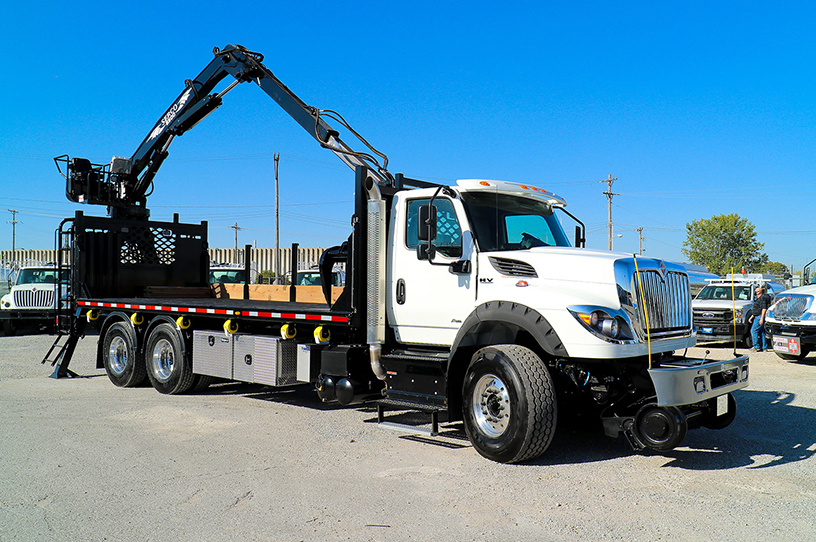
Delivering into a medieval street grid is one of the most demanding jobs a used industrial transport truck can do — and one of the least forgiving of the wrong purchase. Historic centers were never designed for vehicles: street widths are fixed by buildings that have stood for centuries, pavements are original stone, and access is controlled by permits, bollards, and time windows. A used industrial transport truck that performs well on regional routes can be the wrong machine entirely for old-town work.
Why Historic Streets Are a Different Buying Problem
Three constraints define old-town logistics, and each one changes the specification:
- Fixed geometry. Street width, corner radii, arch clearances, and overhanging signage cannot be changed. The used industrial transport truck must fit the street, not the other way around.
- Protected surfaces. Cobbles, setts, flagstones, and aged bridges carry axle-load restrictions that modern roads do not.
- Controlled access. Most European and many Asian and Latin American historic centers operate limited-traffic zones (ZTL in Italy, similar schemes elsewhere), pedestrian priorities, delivery time windows, and low-emission rules.
The practical consequence: buying for old-town work is a dimensioning exercise first and an engine decision second. A mechanically excellent 18-tonne rigid that cannot make the corner is worth less to you than a tired-looking 7.5-tonner that can.
Weight, Axles, and Old Surfaces
Historic districts frequently restrict axle loads to protect bridges, vaulted cellars, and original paving. Two used-truck implications follow:
Ground pressure is real. A loaded 12-tonne rigid concentrates enormous pressure onto stone setts that have moved and settled over centuries. Many conservation authorities cap permissible axle weights — and some restrict total vehicle weight well below what the used industrial transport truck is technically rated to carry.
Suspension matters more, not less. Cobbled surfaces work suspension components hard. When inspecting a used truck for this duty, check for air-suspension bag condition, worn dampers, and chassis cracking at stress points — vibration damage accumulates invisibly on rough stone.
The buyer’s rule: buy the lightest used industrial transport truck that carries the job, and verify the unit’s axle configuration against the specific weight orders that apply in your delivery zone.
Access Rules, Permits, and Time Windows
Physical fit is only half the qualification — regulatory fit is the other half:
- Limited-traffic zones and pedestrian permits. Historic centers typically issue permits by vehicle class, emissions standard, and purpose. Before you buy, confirm the used truck’s Euro emissions class qualifies — a bargain unit that fails the zone standard is worthless for this work.
- Physical filters. Bollards, rising posts, and gated entries enforce street closures. Fixed bollards set a de facto width limit; telescopic ones set a schedule you must build routes around.
- Time windows. Many old towns restrict deliveries to early mornings or off-peak hours. Your used truck must support those windows: quiet operation, working lights, and reliable cold starts at 4 a.m.
- Loading space. Historic loading bays are scarce and shared with tourism. A used industrial transport truck with a tail lift and efficient body layout unloads faster — and faster unloading is worth more than an extra tonne of payload when the bay clock is running.
Emissions and Noise: The Rules That Retire Trucks Early
Low-emission zones expand almost every year, and historic centers are usually first in line. This cuts two ways for used-truck buyers:
It creates the supply. Fleets retire compliant-enough-for-now but non-compliant-for-long trucks at prices that make them attractive for zones without restrictions — and increasingly, older diesel units are being re-certified with particulate filters for continued old-town access.
It favors compact electric. For stop-start old-town duty with short daily distances, used electric rigids and vans are genuinely practical: zero tailpipe emissions satisfies access rules, and regeneration suits constant braking. Check battery health documentation carefully on any used electric unit — it is the single largest value driver.
Noise rules deserve equal attention. Early-morning delivery windows exist partly to protect residents, so bodies with quiet roller shutters, electric tail lifts, and well-maintained refrigeration units extend the hours you can legally work.
Bodies and Equipment That Make Old-Town Delivery Practical
The configuration that dominates historic-district work is a compact cab-over rigid with a box body and column tail lift:
- Tail lifts do the heavy work where there is no dock — verify lift capacity, platform condition, and hydraulic service history on any used unit.
- Dropsides suit restoration contractors moving stone, timber, and scaffold into old quarters where crane access is impossible.
- Small refrigerated bodies serve historic-district food service; check the fridge unit’s hours and maintenance records as carefully as the engine’s.
- Curtainsiders work in tight streets but demand disciplined strap-and-buckle routines — a worn curtain system shows quickly in daily alley work.
One further check buyers skip: body height against the district’s arches and signage overhangs. A body swap that adds 15 centimetres can quietly exclude a used industrial transport truck from half its route.
Maneuvering Aids and Driver Skill
Modern used trucks bring helpful technology to old streets:
- Reversing cameras and proximity sensors are near-essential for blind alleys — confirm they work before purchase, not after.
- Steered axles and rear-steer options on some rigids dramatically tighten effective turning radii for extreme maneuvers.
- Camera-over-mirror configurations reduce overall width and blind spots, though many experienced old-town drivers still prefer glass mirrors for depth perception at kerbs.
Technology, however, only assists. Driver skill remains the decisive factor: training for arch clearances, kerb proximity, and parking among tourists is worth budgeting as deliberately as the used industrial transport truck itself. For genuinely extreme accesses, many operators use spotter protocols — a second person walking the truck through the tightest sections.
Buying Used: Reading a Truck That Has Already Done Old-Town Work
A used truck’s history in historic-district service leaves recognizable signatures — some reassuring, some warning:
Reassuring signs: regular municipal or fleet maintenance records, functioning maneuvering aids, suspension that has been serviced on schedule, and a body specified for the job from the start (tail lift, correct height, compact length).
Warning signs: kerb-scars along panels and wheels (evidence of chronic misjudgment), clutch and brake wear far beyond the odometer’s suggestion (classic stop-start signatures), repainted panels hiding structural repairs, and aftertreatment systems neglected by constant low-speed running — DPF and EGR problems are the city truck’s signature failure.
The strongest candidates are often ex-municipal and ex-utility units: they are usually specified correctly for constrained streets from new, maintained to schedule regardless of cost, and retired at predictable intervals.
Cost and Daily Operations
Budget beyond the purchase price:
- Fuel and energy run higher per kilometre in stop-go historic traffic — model your real route, not brochure figures.
- Insurance reflects tight-street risk: scrapes, third-party property, and pedestrian exposure. Disclosed, well-documented history keeps premiums sane.
- Scheduling should absorb tourist seasons and cruise-day congestion — the same street takes three times longer in August.
- Micro-depots and consolidation hubs outside the walls increasingly anchor old-town logistics: park the big truck, consolidate, and serve the quarter with a compact used rigid, hand carts, or electric trailers.
Historic-district work rewards the buyer who dimensions first and negotiates second. Define your three worst delivery points, fix the maximum length, width, height, and axle load they permit, confirm the emissions class your zone requires — and then go looking for a used industrial transport truck that meets those numbers with documented history. The best unit for narrow historic streets is rarely the newest or the cheapest; it is the one whose geometry, weight, and paperwork already fit the world it will work in.